
Camping in the mountains is one of the most exciting outdoor activities for nature lovers. The fresh air, breathtaking landscapes, peaceful forests, and star-filled skies create unforgettable memories. Many people enjoy escaping busy cities and spending time in the wilderness, where they can reconnect with nature and experience true adventure. However, for many campers, one fear often follows them into the wild—the possibility of encountering dangerous animals.
Wild animals are a natural part of mountain ecosystems. While most animals avoid humans whenever possible, the thought of meeting a bear, wolf, mountain lion, or wild boar can make even experienced campers feel nervous. Understanding these fears and learning how to stay safe can help campers enjoy their outdoor adventures with confidence.
Why People Love Mountain Camping

Mountain camping offers a unique experience that cannot be found in urban environments. The peaceful sounds of birds singing, streams flowing, and leaves rustling in the wind create a relaxing atmosphere. Many campers enjoy hiking through scenic trails, photographing wildlife, fishing in mountain lakes, and sitting around campfires with family and friends.
For some people, camping is a way to challenge themselves and build survival skills. Spending nights in remote locations teaches self-reliance, patience, and respect for nature. The sense of accomplishment after setting up camp, cooking outdoors, and sleeping under the stars is incredibly rewarding.
Despite these benefits, camping in remote mountain areas comes with certain risks, particularly the presence of wild animals.
Common Fears Among Campers

One of the biggest fears among mountain campers is being attacked by a wild animal. Stories shared online, in movies, and in news reports often highlight rare but dramatic wildlife encounters. These stories can create the impression that dangerous animals are constantly lurking around campsites.
Common fears include:
- Hearing strange noises outside the tent at night.
- Encountering a bear while hiking.
- Seeing fresh animal tracks near the campsite.
- Finding food stolen by wildlife.
- Being surprised by an aggressive wild boar.
- Coming across a mountain lion or wolf.
While these fears are understandable, wildlife attacks are relatively uncommon. Most animals prefer to avoid human contact and will leave if they sense people nearby.
Bears: The Animal Most Campers Fear
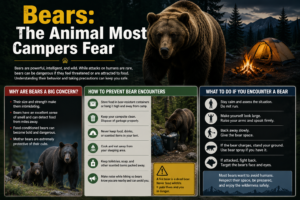
Bears are perhaps the most feared animals among mountain campers. Their large size, strength, and powerful claws make them intimidating. In North America, black bears and grizzly bears are commonly found in mountainous regions.
Bears are usually attracted to campsites because of food smells rather than people themselves. Food left outside, garbage, cooking equipment, and even scented toiletries can attract curious bears.
To reduce the risk of bear encounters, campers should:
- Store food in bear-resistant containers.
- Keep campsites clean.
- Dispose of garbage properly.
- Avoid keeping food inside tents.
- Cook and eat away from sleeping areas.
If a bear is spotted, campers should remain calm, avoid running, and slowly back away while making themselves appear larger.
Wild Boars: Aggressive and Unpredictable
Wild boars are another animal that concerns many campers. Unlike some predators that avoid humans, wild boars can be aggressive when they feel threatened, especially if they have young offspring nearby.
Boars have powerful bodies, sharp tusks, and surprising speed. They can charge quickly and cause serious injuries. Campers hiking through dense forests may accidentally surprise a boar, increasing the risk of a confrontation.
To stay safe around wild boars:
- Make noise while hiking.
- Stay on established trails.
- Avoid approaching piglets.
- Keep a safe distance if a boar is spotted.
- Never attempt to feed wildlife.
Most boars will leave if they realize humans are nearby before being startled.
Wolves and Coyotes
Many people fear wolves because of legends and stories passed down through generations. However, wild wolves rarely attack humans. They are generally cautious animals that avoid human settlements and campsites.
Coyotes are more commonly seen near campsites. Although usually harmless, they can become bold if campers leave food accessible. Feeding wildlife, intentionally or unintentionally, encourages animals to lose their natural fear of humans.
Campers should always secure food and never leave scraps around the campsite.
Mountain Lions: Silent Predators
Mountain lions, also known as cougars or pumas, are highly skilled predators. Their stealth and ability to move quietly make them particularly frightening to some campers.
Mountain lion encounters are rare, but hikers should know basic safety precautions:
- Avoid hiking alone in remote areas.
- Keep children close.
- Stay alert, especially during dawn and dusk.
- Never run from a mountain lion.
- Make yourself appear larger if encountered.
Most mountain lions simply observe from a distance and leave without being noticed.
Nighttime Anxiety in the Wilderness
Even when no dangerous animals are present, many campers experience fear at night. Darkness naturally increases anxiety because visibility is limited. Small sounds can seem much larger and more threatening than they really are.
A squirrel climbing a tree, a raccoon searching for food, or wind moving through bushes can sound alarming when heard from inside a tent.
New campers often spend their first nights listening carefully to every sound around them. Experienced campers learn to recognize normal forest noises and become more comfortable over time.
Carrying a flashlight, camping with companions, and understanding local wildlife can significantly reduce nighttime anxiety.
Learning to Respect Wildlife
One of the most important lessons camping teaches is respect for wildlife. Wild animals are not villains; they are simply living in their natural habitat. Humans are visitors in these environments.
Responsible campers understand that wildlife deserves space and respect. Instead of fearing every animal, they learn how animals behave and how to avoid creating dangerous situations.
Many wildlife encounters become memorable highlights of a camping trip. Seeing a deer grazing at sunrise, hearing an owl call at night, or watching an eagle soar overhead can create a deep appreciation for nature.
Essential Safety Tips for Campers
Anyone planning a mountain camping trip should prepare carefully. Basic safety practices greatly reduce risks and improve the overall experience.
Important tips include:
- Research the area before traveling.
- Learn about local wildlife.
- Carry a first-aid kit.
- Bring a reliable flashlight and extra batteries.
- Store food securely.
- Keep the campsite clean.
- Travel with a partner when possible.
- Inform someone about your travel plans.
- Carry emergency communication equipment.
- Follow park regulations and warnings.
Preparation is often the difference between a stressful trip and an enjoyable adventure.
Overcoming Fear Through Knowledge
Fear is a natural human response to uncertainty. Many campers worry about dangerous animals because they do not fully understand wildlife behavior. Education is one of the best ways to reduce fear.
Learning how bears search for food, how mountain lions hunt, or how wild boars react to threats helps campers make informed decisions. Knowledge transforms fear into awareness.
Experienced campers often report that their fear decreased significantly after spending more time outdoors. As they gained experience, they realized that wildlife encounters were usually peaceful and manageable.
The Beauty Beyond the Fear
Although the possibility of encountering dangerous animals can be intimidating, it should not prevent people from experiencing the beauty of mountain camping. Nature offers incredible opportunities for adventure, relaxation, and personal growth.
The feeling of waking up to a sunrise over mountain peaks, breathing fresh forest air, and enjoying complete silence away from city life is difficult to describe. These moments remind us why so many people continue to explore the wilderness despite their fears.
Camping teaches courage—not the absence of fear, but the ability to move forward while respecting potential dangers. By preparing properly, understanding wildlife, and practicing safe camping habits, outdoor enthusiasts can enjoy unforgettable experiences in the mountains.
In the end, the wilderness is both beautiful and unpredictable. Dangerous animals are part of that reality, but they are rarely the threat people imagine. With knowledge, respect, and preparation, campers can embrace the adventure, appreciate the natural world, and create lasting memories beneath the stars.
