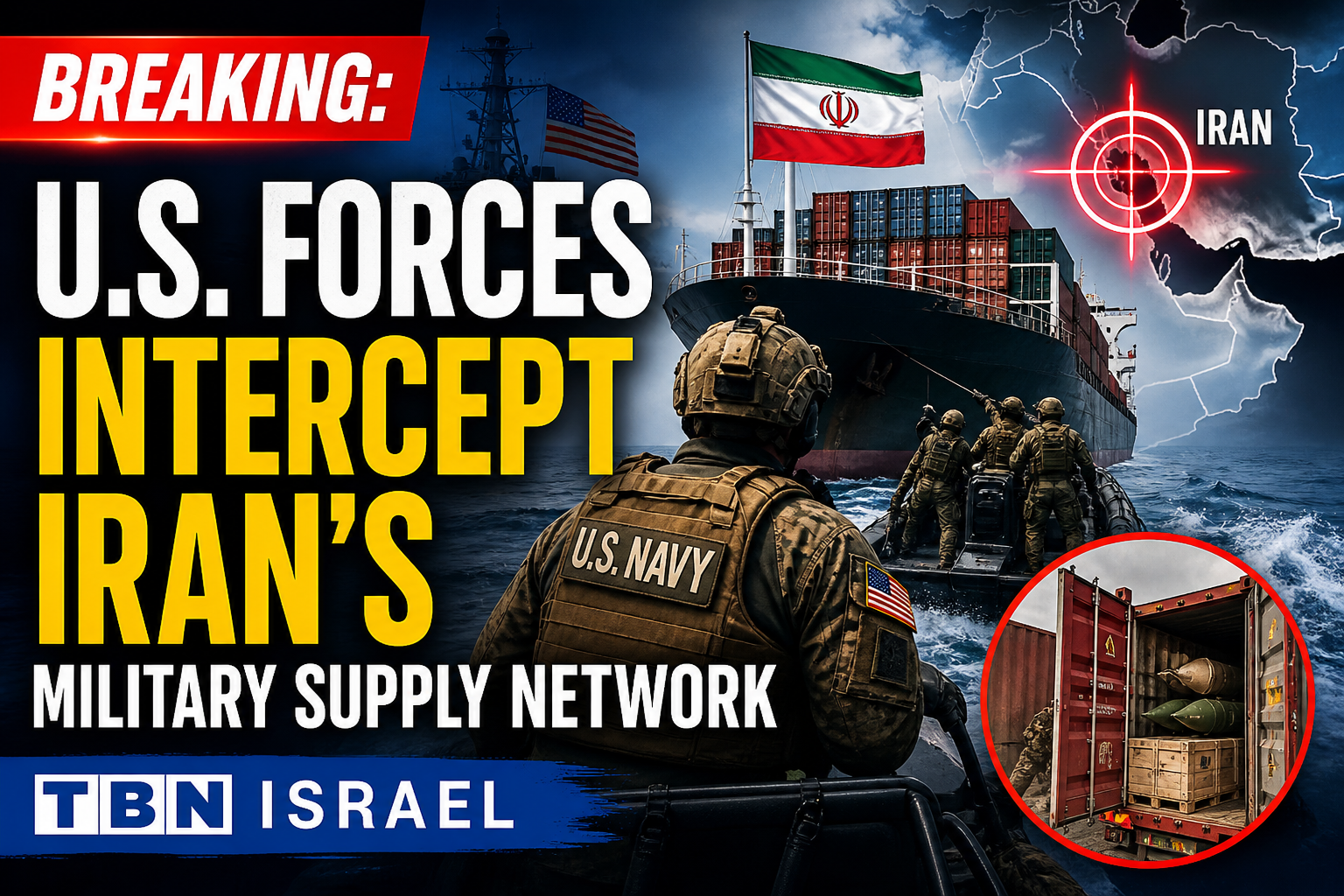
In a major escalation within the ongoing 2026 Middle East conflict, United States military forces have intensified efforts to intercept and dismantle Iran’s military supply network. This development marks a critical phase in the broader confrontation between the U.S., Israel, and Iran—one that extends far beyond direct battlefield engagements and into the strategic domain of logistics, maritime control, and economic warfare.
At the center of this unfolding situation is a U.S.-led naval blockade targeting Iran’s ability to transport military equipment, oil, and dual-use materials. The interception of vessels suspected of carrying supplies for Iran’s military or its regional allies reflects a calculated strategy: weaken Iran not only through direct strikes but by cutting off the lifelines that sustain its operational capabilities.
The Strategic Context: A War Beyond Airstrikes
The current conflict traces back to late February 2026, when coordinated U.S. and Israeli strikes targeted Iranian military infrastructure and leadership. Iran responded with missile and drone attacks across the region, triggering a wider war involving multiple actors and theaters.
As the conflict evolved, it became clear that traditional warfare alone would not determine the outcome. Instead, control over supply chains—particularly maritime routes—emerged as a decisive factor. Iran relies heavily on seaborne logistics to move oil, weapons, and equipment. Disrupting these routes has therefore become a top priority for U.S. Central Command (CENTCOM).
The Naval Blockade and Interception Operations
In April 2026, the United States formally launched a sweeping naval blockade targeting Iran’s coastline. This operation involves thousands of personnel, multiple warships, and aerial surveillance assets, all tasked with monitoring and intercepting vessels entering or leaving Iranian ports.
Under the rules of this blockade, any ship suspected of carrying materials that could support Iran’s military efforts is subject to interception, diversion, or seizure. This includes not only weapons but also “dual-use” goods—items that can serve both civilian and military purposes.
One of the most significant incidents involved the seizure of an Iranian-flagged cargo vessel attempting to breach the blockade. The ship was reportedly carrying equipment that could enhance Iran’s military capabilities. After repeated warnings, U.S. forces disabled the vessel and took control of it in a coordinated operation.
This action was not isolated. Since the blockade began, dozens of vessels have been intercepted or forced to turn back. By early May, U.S. forces had reportedly redirected or halted dozens of ships, demonstrating both the scale and effectiveness of the operation.
Targeting Iran’s Supply Network
The interception efforts go beyond simple maritime policing. They are part of a broader strategy aimed at dismantling Iran’s military supply network—a complex system involving shipping routes, covert logistics channels, and regional proxies.
Iran has long relied on these networks to supply allied groups across the Middle East, including Hezbollah in Lebanon and other militias. By cutting off these supply lines, the U.S. aims to limit Iran’s ability to project power beyond its borders.
Recent reports indicate that U.S. forces have boarded multiple vessels suspected of involvement in these networks. In some cases, ships were released after inspection; in others, they were seized or redirected.
These operations are not without controversy. Iran has condemned the interceptions as acts of “piracy,” arguing that they violate international law and threaten global maritime security.
The Strait of Hormuz: A Critical Battleground
Much of this activity is centered around the Strait of Hormuz, one of the world’s most vital maritime chokepoints. A significant portion of global oil shipments passes through this narrow waterway, making it a strategic focal point in the conflict.
Iran has attempted to leverage its position by disrupting shipping and proposing alternative arrangements for control of the strait. Meanwhile, the U.S. blockade seeks to ensure that Iran cannot use the waterway to sustain its military or economic activities.
The result is a high-stakes standoff with global implications. Disruptions in the strait have already contributed to volatility in energy markets and heightened concerns about supply chain stability worldwide.
Military and Economic Pressure Combined
The interception of Iran’s supply network is part of a broader U.S. strategy that combines military pressure with economic coercion. By restricting Iran’s ability to export oil and import critical goods, the U.S. aims to force Tehran into concessions—particularly regarding its nuclear program.
This approach reflects a shift from direct combat operations to a more sustained campaign of attrition. While airstrikes and ground operations remain part of the equation, the blockade represents a longer-term effort to weaken Iran’s strategic position.
However, the effectiveness of this strategy is debated. Some analysts argue that Iran has developed sophisticated methods to bypass sanctions and blockades, including rerouting shipments and using deceptive tracking techniques.
Risks of Escalation
The interception of military supplies carries significant risks. Each boarding or seizure operation has the potential to trigger direct confrontation between U.S. and Iranian forces.
Indeed, there have already been instances of retaliation. Iran has launched drone attacks against U.S. vessels following seizures, although these attacks have so far caused limited damage.
The situation is further complicated by the involvement of regional actors. Hezbollah, for example, has engaged in cross-border attacks with Israel, while other groups aligned with Iran remain active across the Middle East.
This interconnected network of conflicts increases the likelihood that a localized incident could escalate into a broader regional war.
Political and Legal Controversies
The U.S. interception campaign has also sparked debate within the United States and among its allies. Questions have been raised about the legality of the blockade and the extent of presidential authority to conduct such operations without explicit congressional approval.
Recent developments suggest that the U.S. administration views the blockade as a legitimate tool of pressure rather than an act of war, even as critics argue that it effectively constitutes one.
Internationally, reactions have been mixed. Some countries support efforts to curb Iran’s military ambitions, while others warn that the blockade could set a dangerous precedent for maritime conflict.
The Bigger Picture: A War of Systems
What makes the interception of Iran’s military supply network particularly significant is that it highlights the changing nature of modern warfare. This is no longer just a conflict of armies and air forces; it is a contest of systems—logistics, economics, intelligence, and technology.
By targeting supply chains, the U.S. is attempting to fight the war at its roots rather than its branches. If Iran cannot move resources, it cannot sustain prolonged military operations or support its regional allies effectively.
At the same time, Iran is adapting. Reports suggest that it is exploring alternative routes, including land-based transport and covert shipping methods, to circumvent the blockade.
Conclusion
The interception of Iran’s military supply network represents a pivotal moment in the 2026 conflict. It underscores the importance of logistics in modern warfare and highlights the lengths to which nations will go to secure strategic advantage.
While the immediate impact has been to disrupt Iran’s operations and apply economic pressure, the long-term consequences remain uncertain. The blockade could force Iran to negotiate—or it could provoke further escalation, drawing more actors into an already volatile situation.
What is clear is that this is not just a regional conflict. The stakes are global, affecting energy markets, international law, and the balance of power in the Middle East. As U.S. forces continue to intercept and disrupt Iran’s supply network, the world watches closely, aware that each move carries the potential to reshape the geopolitical landscape.
