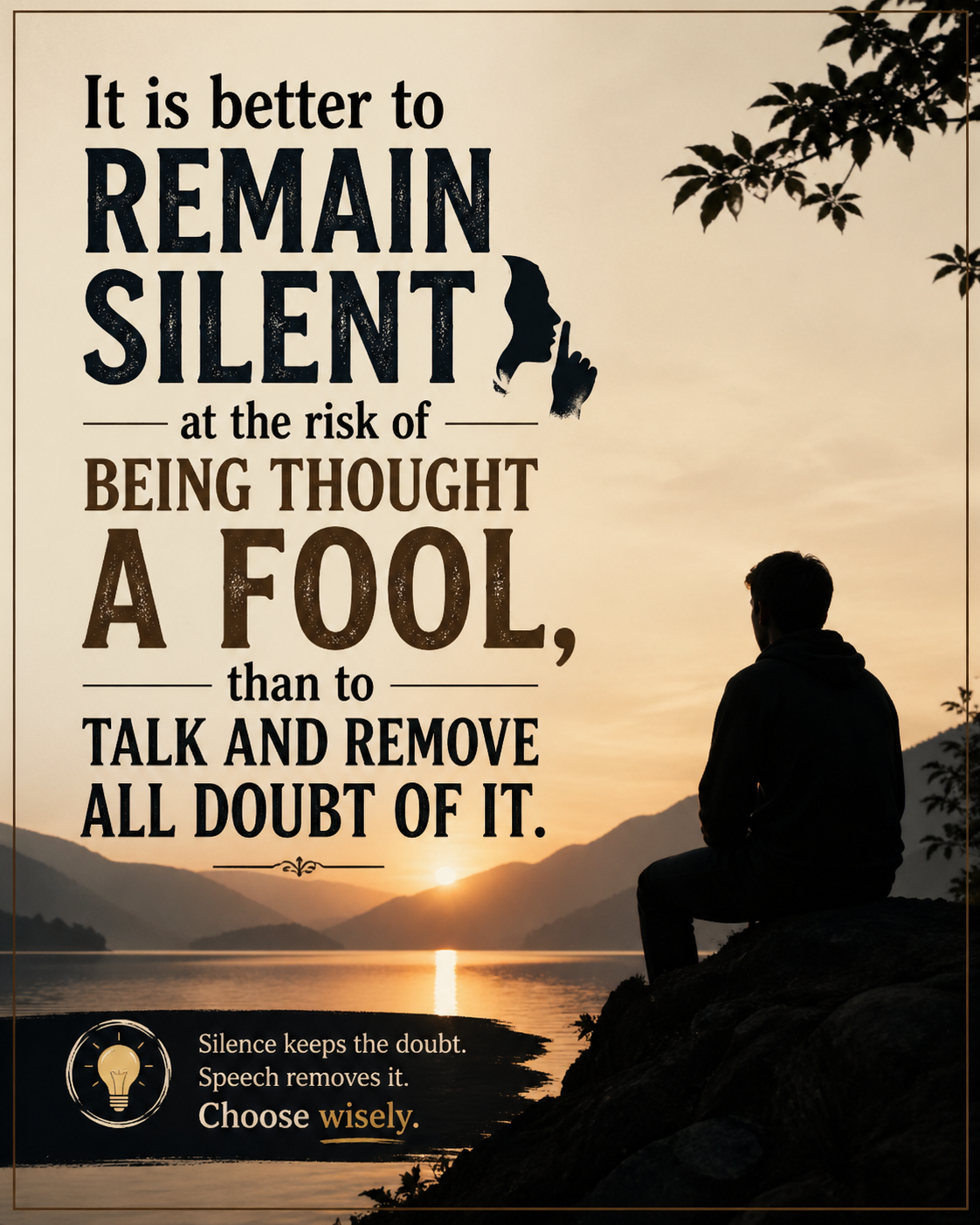
The quote, “It is better to remain silent at the risk of being thought a fool, than to talk and remove all doubt of it,” is widely attributed to Mark Twain, though its exact origin is debated. Regardless of authorship, its meaning has endured because it captures a timeless truth about human behavior, communication, and wisdom.
At its core, the quote is about restraint. It suggests that silence can sometimes be more powerful—and more intelligent—than speaking. When a person speaks without sufficient knowledge, thought, or awareness, they risk revealing ignorance or poor judgment. Silence, on the other hand, preserves ambiguity. Others may suspect a lack of knowledge, but they cannot confirm it. In this sense, silence protects one’s dignity and reputation.
This idea touches on a fundamental aspect of human psychology: people often feel pressure to speak, even when they have little to say. In conversations, meetings, or debates, silence can feel uncomfortable. Many interpret it as weakness, insecurity, or lack of intelligence. As a result, individuals may rush to fill that silence with words—sometimes careless or uninformed ones. The quote warns against this impulse. It argues that speaking should not be automatic; it should be intentional.
Another layer of meaning relates to humility. The quote encourages self-awareness—recognizing what you do not know. In a world where people often try to appear knowledgeable or authoritative, admitting uncertainty can feel risky. Yet, the quote implies that pretending to know more than you do is far riskier. When someone speaks confidently about something they do not understand, it often becomes obvious to others. This can damage credibility far more than quietness ever could.
The quote also highlights the difference between perception and reality. When you remain silent, others may form assumptions about you, but those assumptions are not confirmed facts. Once you speak, however, your words become evidence. If they reveal gaps in understanding, poor reasoning, or lack of insight, the perception becomes reality in the eyes of others. In other words, silence leaves room for doubt; speech can eliminate that doubt—sometimes in an unfavorable way.
Importantly, this quote is not an argument against speaking altogether. It does not suggest that silence is always better or that people should avoid expressing themselves. Instead, it emphasizes thoughtful communication. Speaking should be guided by knowledge, reflection, and purpose. When you have something meaningful to contribute, speaking is valuable and necessary. The quote simply warns against speaking for the sake of speaking.
There is also a social dimension to this idea. In group settings, people often judge each other based on how they communicate. Someone who speaks frequently but without substance may be seen as less credible over time. Conversely, someone who speaks less but chooses their words carefully is often perceived as more thoughtful and intelligent. This perception is not always fair, but it reflects common social dynamics. The quote captures this reality and advises caution.
In professional environments, this principle is particularly relevant. For example, in meetings or discussions, individuals may feel pressure to contribute, even if they are unsure about the topic. While participation is important, uninformed contributions can undermine confidence in one’s abilities. Thoughtful silence—combined with listening and learning—can be more beneficial. It allows a person to absorb information, ask better questions later, and speak more effectively when they do contribute.
The quote also connects to the concept of listening. Silence is not merely the absence of speech; it can be an active choice to listen. Good listeners often gain more insight than those who dominate conversations. By remaining silent, a person can observe, analyze, and understand before responding. This leads to more informed and meaningful communication. In this sense, silence is not passive—it is strategic.
From a philosophical perspective, the quote reflects the value of wisdom over mere expression. Wisdom involves knowing when to speak and when to remain silent. It requires judgment, patience, and awareness of context. Not every thought needs to be voiced, and not every situation requires input. Recognizing this is a sign of maturity and intelligence.
At the same time, the quote can be misinterpreted if taken too literally. If someone always remains silent out of fear of being judged, they may miss opportunities to learn, grow, and connect with others. Making mistakes in speech is part of learning. Sometimes, speaking—even imperfectly—is necessary for progress. Therefore, the quote should be understood as guidance for thoughtful restraint, not as a rule for constant silence.
In modern contexts, especially with social media, this quote feels even more relevant. People can share opinions instantly with large audiences, often without reflection. This can lead to misinformation, misunderstandings, or public embarrassment. The principle behind the quote encourages pausing before posting, thinking before commenting, and ensuring that one’s words are informed and constructive.
Ultimately, the quote teaches a balance between silence and speech. It reminds us that words carry weight and consequences. Speaking without thought can reveal ignorance, while silence can preserve dignity and create space for learning. However, true wisdom lies not in دائم silence, but in knowing when silence serves you and when your voice is needed.
In conclusion, this quote endures because it addresses a universal human challenge: the desire to be heard versus the need to be thoughtful. It encourages humility, self-awareness, and careful communication. By understanding its meaning, we can become better communicators—people who speak with purpose, listen with intention, and recognize that sometimes, the smartest thing to say is nothing at all.
